
The Instigation Dispatch: 2.19.26- Why America's Obsession With Gambling Is a Bad Omen for the Consumer Economy (FREE)
From parlays to prediction markets, Americans have become increasingly reliant on games of chance as a financial lifeline. What happens when gambling replaces hope and hard work in the American Dream?

The House Always Wins: What the Gambling Economy Says About America’s Shrinking Promise
There was a time when gambling was something you did in a specific place.
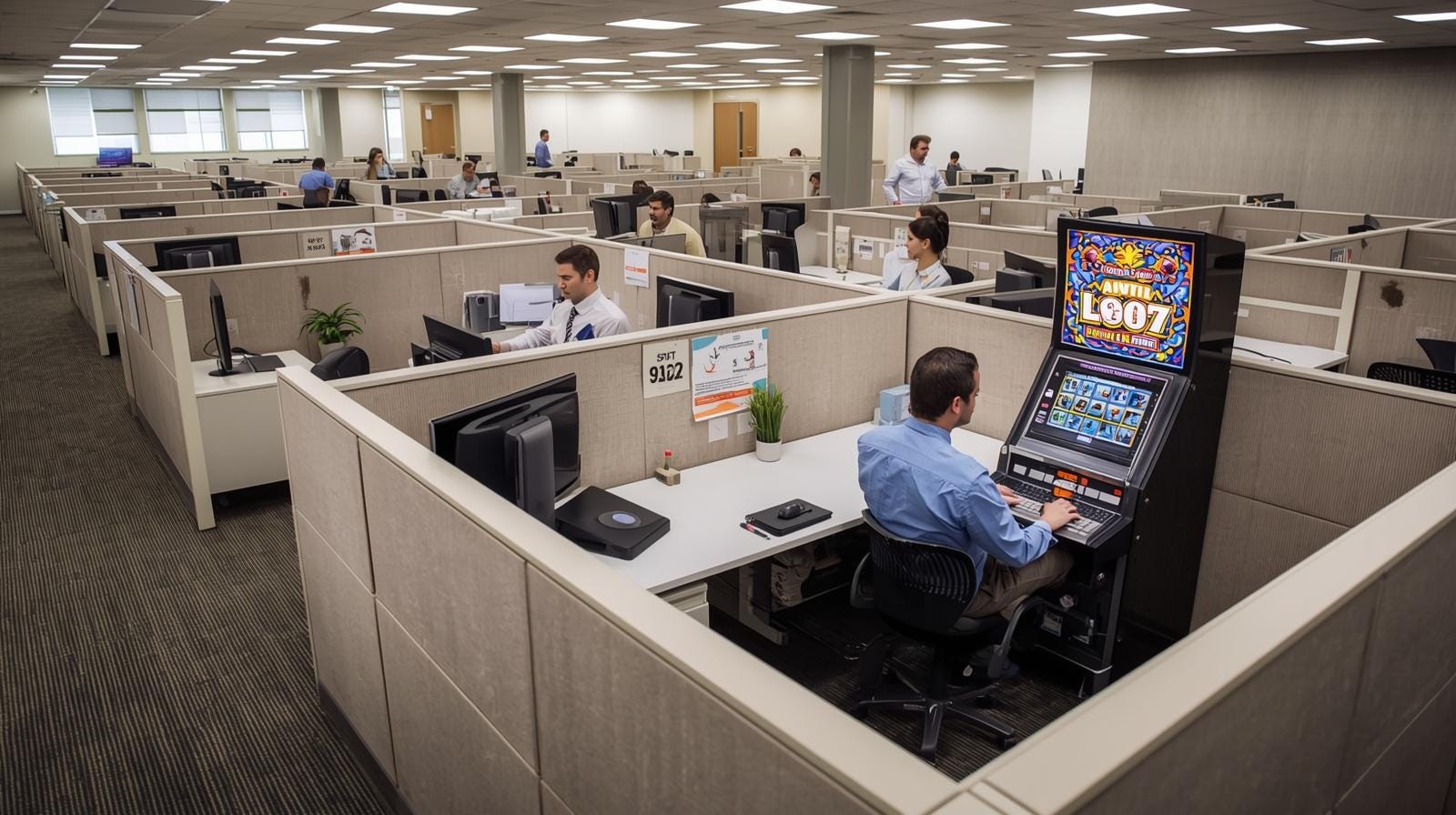
You went to Las Vegas.
You took a trip to Atlantic City.
You bought a lottery ticket at the corner store and felt slightly ashamed about it.
Now?
The casino lives in your pocket. The sports book is an app notification. The lottery is a scratch-off away. And the stock market—once sold as the engine of long-term wealth creation—has been gamified into a 24-hour prediction parlor where vibes, memes, and leverage substitute for fundamentals.
This isn’t just a lifestyle shift.
It’s an economic tell.
Because when a culture starts betting this aggressively on outcomes instead of building toward them, it’s usually a sign that faith in the underlying system has eroded.
And when faith erodes, consumers don’t just change how they spend.
They change how they think.
The Rise of the Wager State
Over the past few years, sports betting apps have gone from niche to normalized. What was once taboo is now advertised during prime-time games. Odds scroll across the bottom of the screen like stock tickers. Analysts discuss parlays the way they once broke down defensive schemes.
And it’s not just sports.
Prediction markets allow you to bet on elections, economic indicators, celebrity outcomes… essentially anything that can be assigned a probability. The future itself has become a tradable asset class.
Even traditional investing platforms have blurred the line between saving and wagering. Financial apps built billion-dollar businesses by making trading feel frictionless, social, and—let’s be honest—fun.
We’ve financialized uncertainty.
We’ve monetized probability.
We’ve turned civic life into a parlay.
And if you zoom out far enough, you start to see the deeper cultural signal beneath all of this activity.
It’s not confidence.
It’s desperation.
When Work Stops Feeling Like the Path
For generations, the American promise was relatively simple:
Work hard.
Get educated.
Play by the rules.
Climb.
Was it evenly distributed? Absolutely not.
Was it always accessible? Not even close.
But the narrative held.
Now, for a growing segment of the population, that narrative feels fictional.
Housing costs outpace wages.
Student debt lingers like a shadow.
Healthcare remains precarious.
Retirement feels theoretical.
The result?
A subtle but profound psychological shift.
If effort no longer guarantees progress, then outcomes start to feel arbitrary.
If outcomes feel arbitrary, then betting doesn’t seem irrational.
It feels efficient.
Why grind for incremental gains when a well-timed wager could shortcut the system?
This is not an indictment of individual bettors. It’s an indictment of an environment that makes betting feel like a rational strategy.
When people lose faith in their ability to thrive off their work alone and start relying on chance, that’s not just a consumer behavior shift.
That’s institutional stress.
The Lottery Mindset
There’s a reason lottery sales tend to spike during economic downturns.
When the path to upward mobility narrows, the appeal of a sudden leap expands.
But what’s different now is that the lottery isn’t a once-a-week ritual. It’s ambient.
Every game.
Every market open.
Every headline.
The entire ecosystem whispers:
“You could flip this.”
“You could catch this.”
“You could hit.”
The system has become a series of micro-lotteries.
And when a society starts organizing its economic hopes around “hitting,” that tells you something critical:
The ladder feels broken.
The Erosion of Predictability
Consumers thrive on predictability.
Not certainty. Not perfection. Just predictability.
If I do X, I can expect Y over time.
That’s the foundation of brand-building too. Consistency. Reliability. Reinforcement.
But in a culture where volatility becomes the norm—where everything from employment to housing to healthcare feels unstable—the consumer mindset shifts from planning to coping.
You don’t build for the long-term.
You hedge.
You hustle.
You speculate.
This has massive implications for brands.
Because if your brand is part of “the system”—a bank, an insurer, a telecom, a retailer—you are now operating in an environment where the system itself feels like a roulette wheel.
And people don’t trust roulette wheels.
What This Means for the American Consumer
The rise of gambling culture isn’t just about risk tolerance.
It’s about time horizons.

When consumers believe in a stable future, they invest in it.
They buy homes.
They start businesses.
They save for retirement.
They plan vacations a year out.
When they don’t?
They chase immediacy.
They look for short-term wins.
They become deal-driven.
They delay commitment.
They demand flexibility.
A consumer steeped in volatility thinks differently than a consumer anchored in security.
And increasingly, the American consumer feels more like a day trader than a long-term investor in their own life.
That is an ominous shift.
Because day traders are reactive.
Long-term investors are strategic.
Which one builds enduring brands?
The Brand Problem: Operating Inside a Casino
Here’s the uncomfortable truth:
Many brands helped build this environment.
Financial institutions gamified trading.
Media companies normalized betting integration.
Tech platforms optimized for engagement spikes instead of stability.
Now those same institutions want to talk about trust, partnership, and long-term value.
But trust is hard to build in a casino.
If consumers perceive the broader system as rigged—or at least unpredictable—then your brand messaging about steady progress can feel detached from their lived experience.
And here’s the paradox:
Brands need consumer confidence to drive sustained growth.
But the proliferation of gambling behaviors signals declining systemic confidence.
You can’t build long-term brand equity in a culture that increasingly believes the only way to win is to get lucky.
Coping vs. Climbing
There’s a subtle but important distinction between consumers trying to climb and consumers trying to cope.
Climbing is aspirational.
Coping is defensive.
Climbing consumers want growth tools.
Coping consumers want relief valves.
The gambling economy functions as a relief valve. It offers a temporary suspension of structural frustration.
For $10, you can suspend disbelief.
For $25, you can imagine a breakthrough.
For one parlay, you can feel agency.
That emotional transaction is powerful.
But it’s also fragile.
Because when enough of those bets fail—and statistically, most do—the underlying frustration doesn’t disappear.
It compounds.
And compounded frustration has cultural consequences.
The Cultural Cost of Chance
When luck becomes the dominant narrative of success, meritocracy collapses psychologically; even if it never fully existed materially.
If the only visible winners are:
• Crypto savants
• Parlay legends
• Meme stock gamblers
• Viral influencers
Then the cultural script shifts.
Why invest in mastery?
Why invest in incremental improvement?
Why invest in institutions?
Just spin.
Just swing.
Just send it.
That mindset doesn’t just affect markets. It affects civic life. It affects community engagement. It affects trust in everything from government to education to employers.
When even elections and public policy become fodder for speculative markets, the line between participation and wagering blurs.
Citizens become bettors.
Observers become traders.
Democracy becomes odds.
That’s not a neutral evolution.
That’s a cultural recalibration.
The Warning Sign
None of this means gambling should be outlawed. Nor does it mean markets shouldn’t exist.
But when gambling becomes normalized as a primary pathway to mobility, it signals that traditional pathways feel insufficient.
That’s the warning.
Because historically, societies that drift toward speculative frenzies often do so at moments of structural strain.
When wages stagnate.
When inequality widens.
When institutions lose legitimacy.
Speculation fills the vacuum.
It’s not new. But the scale and accessibility are.
The smartphone turned the casino into infrastructure.
What Brands Must Understand
If you’re operating inside this moment, you have to accept a few realities:
Your consumer may be more financially anxious than they admit.
Their time horizon may be shorter than your business model assumes.
Their belief in systemic fairness may be lower than your messaging suggests.
So what do you do?
You don’t lean into fantasy.
You don’t sell improbable breakthroughs.
You sell stability.
You sell clarity.
You sell competence.
In a culture flirting with chaos, pragmatism becomes premium.
If the broader system feels like a lottery, the brands that win will be the ones that feel like anchors.
Not jackpots.
Anchors.
The Future State of the Consumer
If this trend continues, we’re looking at a consumer who:
• Values liquidity over loyalty
• Prioritizes flexibility over commitment
• Trusts peer signals over institutional messaging
• Seeks immediate upside over deferred reward
That consumer is harder to build with.
Harder to retain.
Harder to forecast.
Which means the business community has a stake in the health of the underlying economic narrative.
Because a society that believes in earned progress behaves differently than one that believes in lucky breaks.
And lucky breaks are, by definition, unsustainable.
The Bigger Question
The proliferation of gambling and prediction markets isn’t just about entertainment.
It’s a referendum.
It’s the market telling you that people are hedging against the idea that effort alone will carry them.
It’s a culture whispering that the old playbook no longer feels reliable.
And if that’s true, then brands can’t operate as if nothing has changed.
You can’t message upward mobility in a downward-spiraling confidence cycle.
You can’t promise steady returns in a world obsessed with moonshots.
You have to meet people where they are:
Suspicious.
Volatile.
Cautious.
Hopeful, but guarded.
The House and the People
In every casino, the house eventually wins.
That’s the math.
But in a functioning economy, the people are supposed to win too… over time, through work, through growth, through stability.
If more Americans start to believe that the only way forward is to roll the dice, then the issue isn’t gambling.
It’s governance.
It’s wage growth.
It’s institutional trust.
It’s the widening gap between productivity and prosperity.
And if brands don’t recognize that context, they risk becoming just another flashing sign in a system consumers increasingly believe is stacked.
The gambling boom is not just a trend.
It’s a signal flare.
It’s telling us that confidence has thinned.
That patience has eroded.
That the ladder feels wobbly.
And in that environment, the question for every brand isn’t “How do we win?”
It’s “How do we prove we’re not part of the house?”